Overview
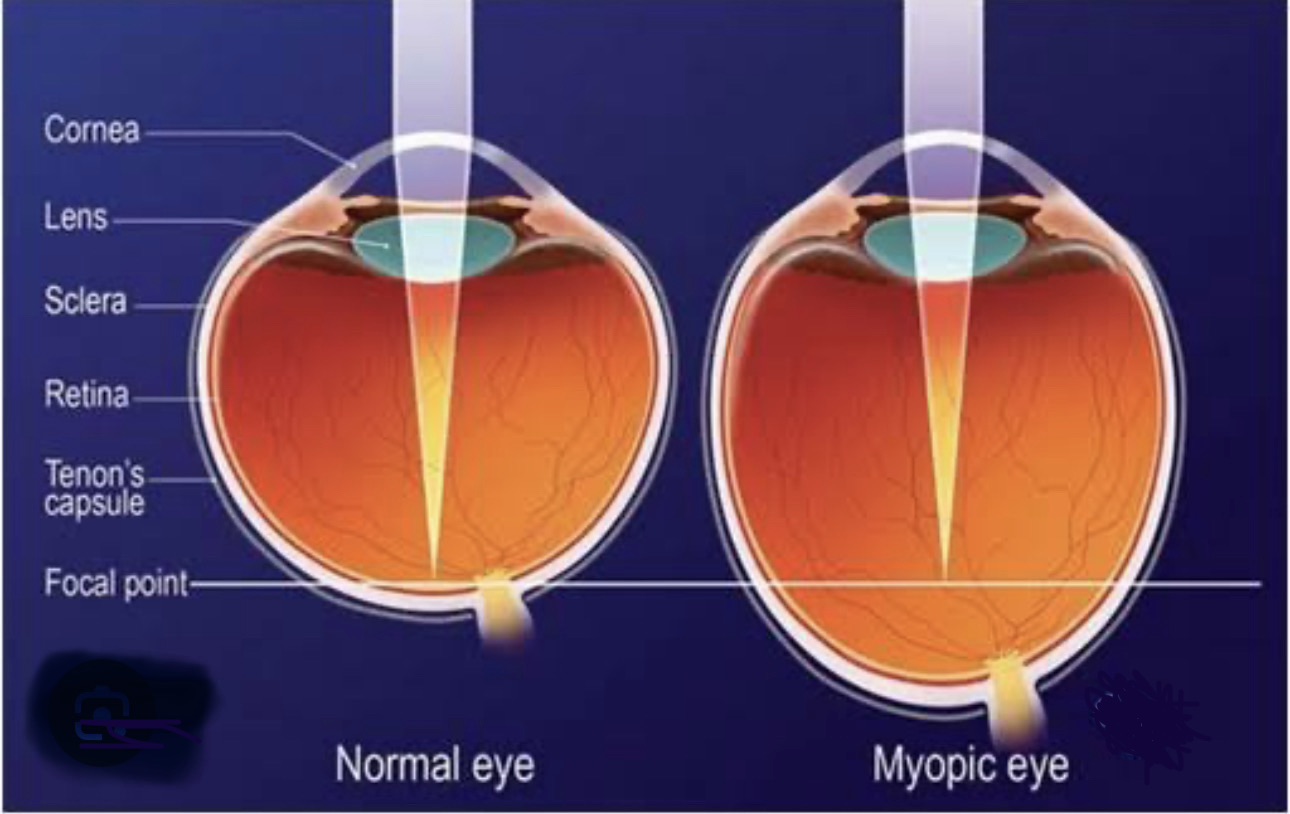
Nearsightedness causes trouble seeing objects and people far away. As a result, objects and people in the distance appear blurry and seem out of focus. With myopia, you will have trouble deciphering words on a whiteboard and seeing pictures on the cinematic or television screen. With nearsightedness, there is a difference in the shape of the eyeball, causing it to appear oval-shaped instead of round. As a result, light focuses only in the front of the retina instead of directly on it. Prescription glasses and contact lenses are designed to correct myopia, a temporary solution. There are, however, more permanent treatment options like surgery to rectify nearsightedness, so there's no permanent reliance on prescription eyewear.
Symptoms of High Myopia
- Straining of the eyes to see clearly
- Headaches
- Frequent squinting
- Trouble seeing objects and people in the distance
However, underlying medical conditions and other related eye disorders can cause the above-mentioned symptoms, which is why it’s imperative to visit a licensed healthcare practitioner for an accurate, official diagnosis.
Risk Factors for High Myopia
High myopia may be closely linked with certain genetically inherited conditions, such as:
- Ocular albinism
- Marfan syndrome
- Retinopathy of prematurity (ROP)
- Congenital-acquired glaucoma
Causes of High Myopia and Additional Factors that Limit Vision
The eyeball is excessively stretched in high myopia, resulting in its long length. The eyeball’s shape changes its proportions significantly, so the incoming light only focuses on the front of the retina instead of directly on the retina itself. Therefore, those with high myopia experience poor, limited and hazy vision. There are other complications that further deteriorate vision, such as:
- The macula, the centre of the retina, declines and begins to thin with age.
- It's important to note that the retina starts to thin, increasing its susceptibility to tears or holes, further increasing the risk of retinal detachment. However, with early detection and proper management, some of these complications can be prevented.
- Myopic retinoschisis (MRS) is a disorder that causes the retina to split.
- Layers beneath the retina can crack or deteriorate, enabling abnormal blood vessels to form beneath the retina.
- Glaucoma, a condition that raises intraocular pressure, increases the risk of vision deterioration.
Myopia