Overview
Intraocular trauma repair refers to several surgical interventions. These interventions are crucial in restoring the globe’s integrity and returning eyesight after a traumatic injury to the eye from penetration or blunt force impact. The type of surgical repair depends on the type and extent of the ocular injury. It may involve the repair of ruptures in the sclera or cornea, the removal of foreign bodies in the eye and the management of prolapsed tissue. However, Dr Yako's role doesn't end there. He is also responsible for managing complications such as vitreous haemorrhage and retinal detachment. He, therefore, plays a significant part in lowering the risk of long-term complications.
Commonly Employed Surgical Techniques in the Management of Eye Trauma
- Globe repair is integral as it can save the structure of the eye within 24 hours of an open injury. The first few hours are critical in the management of these injuries.
- The complexity of eye trauma often necessitates a staged surgical approach. This means that surgery cannot be done in a single setting and requires interventions in stages. For example, surgeons immediately close the wound, stop the bleeding, and manage the anterior chamber. A second procedure, like a vitrectomy, is performed at a later stage once the patient is stable.
- A comprehensive management approach involves addressing various issues at once. This includes all damaged areas of the eyes, including the posterior and anterior segments.
- Management of corneal and scleral lacerations involves sealing the wounds, typically through the use of non-absorbable sutures.
- Management of the vitreous involves its removal if it has prolapsed.
- A primary lensectomy is performed if the lens has been breached. It involves removing and replacing the damaged eye lens.
- Vitrectomy, a widely acclaimed surgery known for its benefits and high success rate, is performed to manage complications from ocular trauma, such as the presence of intraocular foreign bodies, vitreous haemorrhage and retinal detachment.
Iris Repair + Trauma
Intraocular (Inside the eye) Injection
Overview
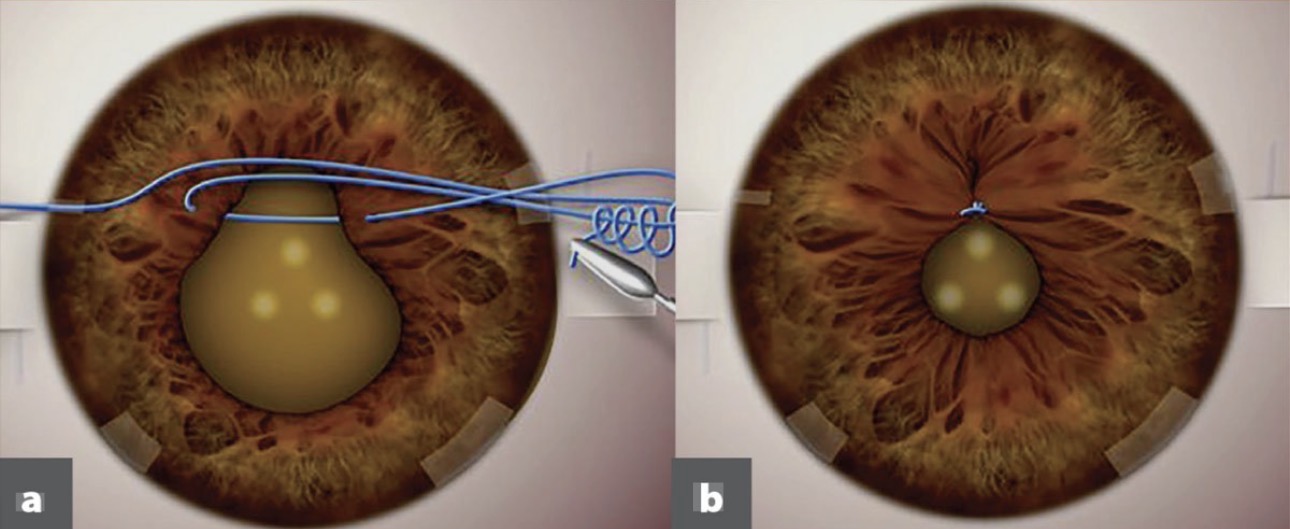
Iris repair is a surgical procedure that uses various techniques and materials, one of which is sutures, to restore the iris and pupil to their original, circular shape. This repair is necessary when the iris, a crucial part of the eye, is significantly damaged due to congenital abnormalities, traumatic eye injuries, or previous eye surgeries, causing distress to our patients.
Iris repair helps restore function to the iris after significant loss or damage, which may result in light sensitivity, glare, and accompanying visual disturbances such as blurred vision, double vision, and difficulty in focusing. Therefore, iris reconstruction focuses on returning the function of the iris as well as its anatomical appearance.
Surgical Techniques for Iris Repair
- The Use of Sutures: Sutures are versatile medical tools used for a variety of surgical procedures. In iris repair, sutures are used to re-contour or reconnect segments of the iris, particularly in the event of iris detachment (iridodialysis), with the aim of forming a round, anatomically appropriate pupil.
- McCannel Technique: The McCannel technique is a highly specialised surgical technique for repairing iris lacerations. It relies on sutures to secure the peripheral iris to the scleral wall.
- Iridodialysis Repair: This meticulous, well-known surgical approach involves the use of sutures to reconnect the iris to the ciliary body. In some cases, both an intraocular lens and a synthetic iris are used to repair the defect.
- Prosthetic Irises: Prosthetic irises are medical devices used for expansive iris defects. Depending on the patient's preferences and eligibility, there are several different prosthetic iris options, such as an iris lens diaphragm and synthetic, customizable iris implants. This variety ensures that patients can make informed decisions about their treatment.
Factors to Consider for a Successful Outcome
- The size and extent of the iris defect influence treatment options.
- Take into account ocular co-morbidities
- The patient’s preferences, such as cosmetic goals and functional needs, are considered.